
Dear Human,
I can already imagine what it will feel like to watch them on stage without me. I will probably be somewhere in the audience, smiling, cheering them on and hoping they give the best performance of their lives. But I know I will also feel that urge to be up there with them, doing something I have always loved. I might even find myself thinking about what I could have contributed if I were still part of the group. It is a strange feeling to anticipate, especially when I am the one who has decided to leave.
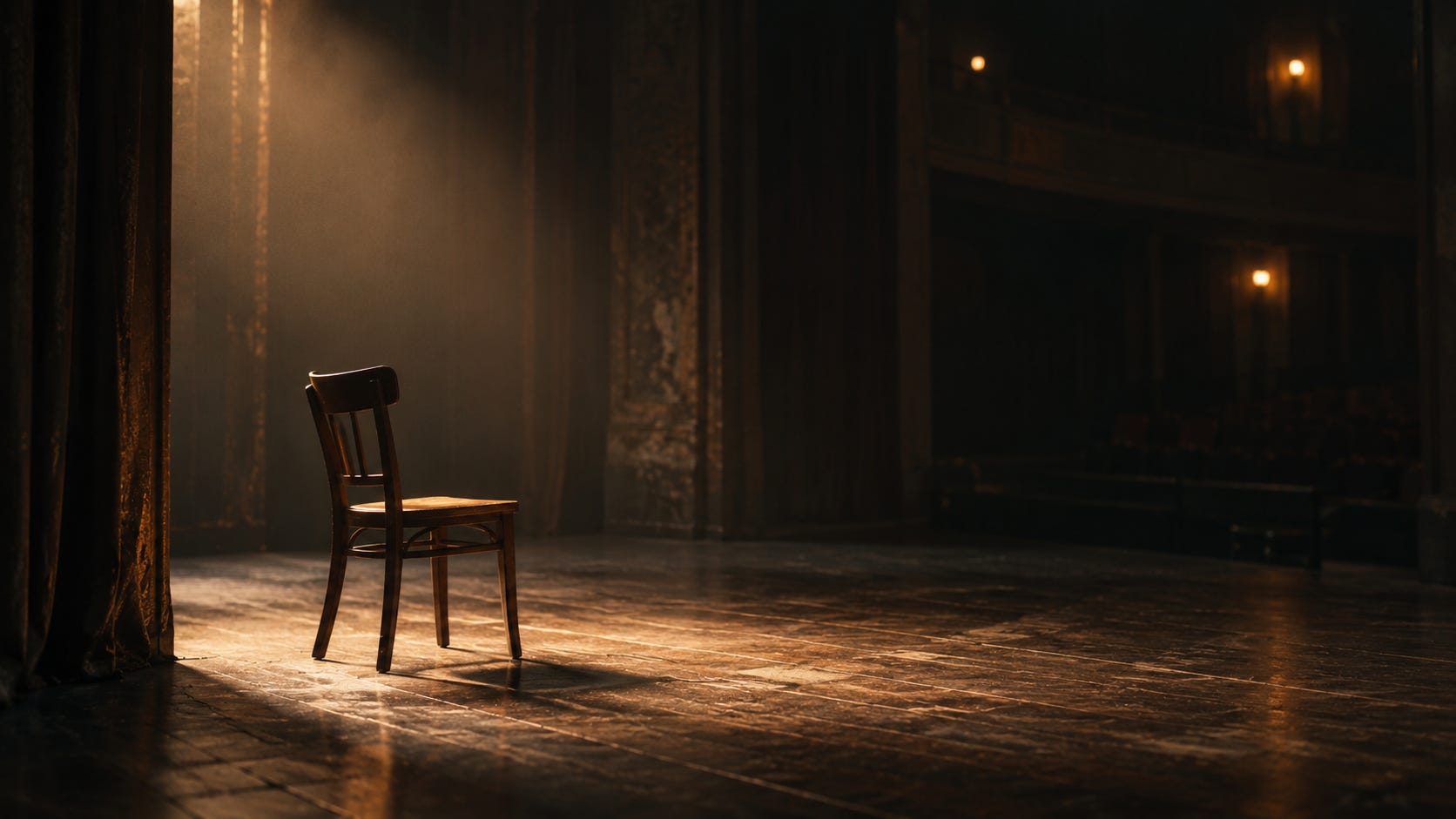
I have been thinking about how we sometimes get to a point where we have to step away from people, responsibilities or places that still mean a great deal to us. I think it would be easier to explain these decisions if we no longer cared about what we were leaving behind. If the relationships had completely broken down, if the work had become meaningless, or if there was nothing left to miss, the decision might feel less complicated. But what happens when you still love what you do, still believe in its purpose and still want to see it succeed, yet realise that continuing to be part of it is gradually taking something from you?
For a long time, I belonged to a group where I genuinely enjoyed what we did together. I joined because I wanted to participate, contribute and serve God through something I loved. I had no particular interest in occupying a position. I was happy to be a member, support the people who led us, and do whatever I could to make things work. I attended rehearsals, gave my time and offered help when it was needed. I enjoyed the relationships we were building, and it felt fulfilling to know I could contribute to a collective effort without being responsible for everything.
Eventually, they asked me to lead.
I understood why the opportunity came, and I accepted it, believing the same willingness to work together would continue. After all, I had supported the people who led before me, and I knew their work became much easier when members were available and willing to contribute. I imagined that leadership would be an opportunity to give more of myself to something I already loved. What I did not fully anticipate was how different the experience would become when I was the one expected to make everything happen.
It is difficult to lead people who do not consistently play their parts. You can organise rehearsals, communicate plans, remind people of their commitments and try to accommodate their schedules. Still, there is only so much you can accomplish when participation itself becomes something you have to keep pleading for. Sometimes, you spend more time trying to get people to show up than actually doing the work you came together to do. And when things eventually fall apart, everyone remembers that someone was supposed to be in charge.
I understand that people have lives outside the things they commit to. Jobs, family responsibilities, personal challenges and circumstances sometimes make participation difficult. I have my own responsibilities too, and I would never assume someone’s absence automatically means they don’t care. But I also believe that when people willingly become part of something, their participation should be understood as important. A group cannot function simply because one person is determined to make it work. At some point, everyone has to decide what their commitment means and what they are willing to contribute.
I began to notice I no longer enjoyed what I had once looked forward to. Rehearsals became another thing to worry about. Plans required endless follow-ups, and even simple responsibilities seemed to demand more effort than they should. There were disagreements, misunderstandings and moments when I felt I was carrying expectations without receiving the support necessary to meet them. I understood that leadership came with difficulties, and I was willing to handle them. What became exhausting was feeling that I had to keep supplying the willingness that should have come from others.
And gradually, the fulfilment began to disappear.
This was particularly difficult for me because I considered what we did an expression of my service to God. I had joined willingly and found genuine satisfaction in offering my time and abilities. But somewhere along the way, I became so focused on getting others to participate that I struggled to enjoy my own participation. I thought about everything that needed to be done, who hadn’t responded, who might not show up, and how we would manage if certain people were unavailable. The work was still meaningful to me, but the experience had changed.
I eventually decided that I no longer wanted to lead. It was a difficult decision, and I was encouraged to see my responsibilities through, which I did. When that period ended, I made it clear I would not continue in the position. I hoped stepping down would let me return to being an ordinary member, someone who could show up, participate and enjoy the work without carrying the entire responsibility for its success.
But I discovered that stepping down from a position doesn’t necessarily mean people stop treating you as the person responsible.
The expectations continued. When something needed to happen, I still felt the pressure to intervene. When plans stalled, I found myself trying to make them work. Because I cared about the group and wanted it to succeed, I often got involved even when the responsibility was no longer mine. I could see what needed attention, and it was hard to ignore when I knew I could help.
I have also had to question my own part in this. Perhaps there were times when I should have let others handle things differently, even when I worried about the outcome. Perhaps my willingness to keep stepping in made it easier for everyone to continue expecting me to do so. I don’t think caring about something is a weakness, but I am beginning to understand that care can become exhausting when we treat every problem as something we personally have to solve.
I think this happens in many areas of life.
Some people in families become responsible for organising everything because they have always been dependable. Some employees keep getting extra work because their managers know they will find a way to deliver. Some friends are always the ones reaching out, resolving disagreements and keeping relationships alive. Sometimes, these responsibilities begin with something good. We want to help, we enjoy contributing, and we take satisfaction in knowing that people can rely on us.
But over time, being dependable can become an expectation that leaves very little room for us to be anything else. People become accustomed to our availability and may not recognise the effort it takes to keep showing up. And because we have always found a way, they may assume we always will.
I think we need to be careful about what we expect from people simply because they have demonstrated that they are capable of doing something. Being capable does not mean someone has an unlimited capacity to give. Being reliable does not mean they never become tired. And the fact that a person once accepted a responsibility should not mean they must remain responsible for it long after they have stepped away.
I’ve also come to appreciate something about simply being a member of a group. We often speak about leadership as though it is the natural progression for anyone who is committed, gifted or dependable. Someone does something well, and before long, we begin to imagine they should lead others who do the same. Sometimes, that is a wonderful opportunity, and some people genuinely find greater fulfilment in leadership. But being the person who contributes is no less.
I was happy when I could attend rehearsals, learn my part, support whoever was leading and go home knowing I had given what I could. I didn’t need to be responsible for everyone finding meaning in what we were doing. I could appreciate another person’s leadership, follow instructions, offer suggestions where necessary and still feel that I was doing something worthwhile. Looking back, I think I didn’t fully appreciate the freedom in that arrangement until it was gone.
And perhaps that is something we should allow ourselves to acknowledge more often. We don’t always have to be at the centre of something to contribute meaningfully. Sometimes, we are happier supporting a vision than carrying the responsibility of making it happen. There is no shame in recognising that a particular position no longer suits us, even when other people believe we are capable of occupying it.
I have also been thinking about the decisions we make when we reach our limits. They are not always made in a calm moment, and I know how easy it is for one upsetting experience to bring months of frustration to the surface. But I think there is a difference between making a decision solely because something has upset us and recognising, through that experience, that we have been unhappy with a situation for much longer than we have admitted.
Sometimes, we already know that something needs to change. We have thought about it, complained quietly, tried to adjust and hoped that things would improve. We continue because we care, because we don’t want to disappoint people, or because we worry about what might happen if we leave. Then something happens, and we finally make the decision we have been considering for a long time.
Of course, I do not believe leaving is always the answer. In some situations, honest conversations, better support, or a clearer distribution of responsibilities can make a considerable difference. Some commitments require us to persevere through difficult periods, and it’s valuable to learn to work with people whose attitudes and approaches differ from ours. But sometimes we have made those efforts and can no longer pretend the situation is working for us.
And I think we should be allowed to acknowledge that without having to convince everyone that our reasons are sufficient.
One thing I have found difficult about stepping away is knowing that people may interpret the decision differently. Some may think I am angry. Others may assume I have lost interest or no longer care about what happens to the group. Some may believe I should have stayed and kept doing what I could, especially because I had been so involved before.
I understand that people will have their opinions. They may even be disappointed, and I cannot prevent that. But I am also learning that some decisions have a history that can’t be explained in a single conversation. Sometimes, explaining requires revisiting experiences you would rather leave behind, mentioning people who may have seen things differently, or entering discussions that leave you more exhausted than before. I don’t believe every personal decision needs to become a public examination simply because others are affected by it.
I still care deeply about the people I have worked with, and I want them to succeed. I hope they continue doing the things we once enjoyed together, and I hope they discover what they can accomplish when everyone takes greater responsibility for the work. But I also recognise that their growth is no longer my personal responsibility. They may find their own way of doing things, make mistakes, learn from them and achieve things I would never have imagined. Or they may face some of the same difficulties I faced. Whatever happens, I have to let them work things out without assuming I must always be there to help.
That is perhaps one of the harder parts of stepping away from something you have invested so much of yourself in. You have to accept that life will continue without your involvement, even when a part of you still wants to know how everything is going.
I do not know whether I will eventually return. I might, especially if circumstances change and I can participate without feeling responsible for everything. I still love what we do, and I do not think that love has disappeared. What I know is that I need some distance from the responsibilities and expectations that have gradually made the experience exhausting.
And I am sad about it.
I will miss the rehearsals. I will miss being part of the performances and sharing the satisfaction of seeing something we worked on together come to life. I will miss the people, including some of the very people with whom I have had disagreements. I will continue to appreciate the memories, and I don’t want the difficulties of later years to erase how much joy I found there in the beginning.
When I eventually watch them perform without me, I know I will be happy for them. I will probably remember what it felt like to stand where they are standing, and I may wish, even if only for a moment, that I were still part of it.
I suppose that is the part of this decision I have to learn to live with. I can miss something and still know why I needed to leave. I can wish the people well without feeling responsible for what happens next. And I can keep serving God in other ways, even as I figure out what that might look like.
For now, I am learning to accept the sadness that comes with stepping away from something I still love.
I did not expect to miss it this soon.
Just an Ordinary Human,
Femi Fragile.